
Abstract
Keywords ;
Air Pollution, PM2.5, Dementia, Alzheimer’s Disease, Neuroinflammation, Delhi, Environmental Health, India, Neurology, Public Policy
Tags:
#AirPollution #BrainHealth #DelhiSmog2025 #DementiaAwareness #EnvironmentalNeurology #PublicHealthIndia #CleanAir
Air pollution in India has evolved into a public health crisis with deep neurological implications. Recent evidence links chronic exposure to fine particulate matter (PM2.5) and other pollutants to neuroinflammation, vascular damage, and cognitive decline, contributing to dementia and Alzheimer’s disease. Using Delhi as a case study, this paper examines the intersection of air quality deterioration and neurological disorders in 2025. Findings underscore a rising neurological disease burden attributable to air pollution, with clinical, epidemiological, and policy implications for India’s healthcare system.
1. IntroductionAir pollution has long been associated with cardiovascular and respiratory illnesses, but growing research now identifies its profound impact on the brain. In India, where cities consistently record among the world’s highest concentrations of PM2.5, air pollution is emerging as a determinant of neurological morbidity. By 2025, clinicians and researchers have begun reporting alarming patterns of cognitive impairment, mood disturbances, and accelerated aging among exposed populations.
The 2025 State of Global Air (SoGA) report attributes 2 million deaths in India to air pollution, with over 54,000 dementia-related deaths linked to exposure in 2024 alone. These findings position air pollution as a major risk factor for neurodegenerative disease, on par with diabetes or hypertension.
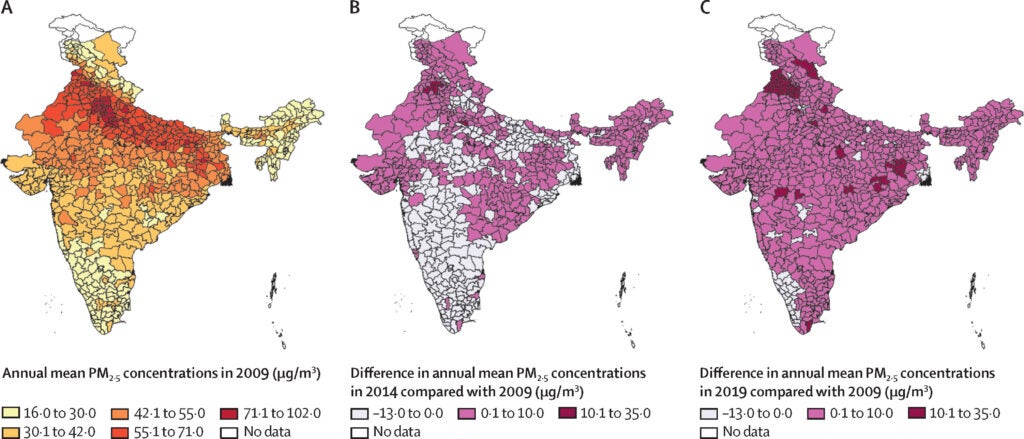
Delhi continues to symbolize the acute intersection of environmental and neurological health crises. In October 2025, severe smog episodes drove PM2.5 concentrations well beyond WHO’s safety limit of 5 µg/m³, often exceeding 200–300 µg/m³ in northern parts of the city.
Clinical Observations
Local neurologists, including Dr. P. N. Renjen at Indraprastha Apollo Hospitals, reported a surge in patients exhibiting cognitive and behavioral symptoms correlated with high-pollution days. Symptoms included confusion, poor sleep, irritability, and short-term memory loss. Such real-time neurological deterioration echoes global studies showing acute air pollution exposure can impair cerebral function within days.
3. Patient Scenario
A 71-year-old male from North Delhi experienced accelerated cognitive decline after a 10-day stretch of “very poor” AQI. His family reported increased forgetfulness, disorientation, and mood volatility. Neurological evaluation ruled out stroke and infection, leading clinicians to attribute his symptoms to pollution-induced neuroinflammation. This aligns with emerging neuropathological research linking PM2.5 exposure to amyloid plaque accumulation and tau pathology, characteristic of Alzheimer’s disease.
4. Research Findings and Mechanisms
4.1 Epidemiological Evidence
-
The SoGA 2025 report ranks air pollution as a top five risk factor for dementia mortality in India.
-
Studies show women and older adults are most affected due to greater vulnerability to oxidative stress and caregiving-related exposure patterns.
-
Regional data from North India reveal cognitive decline rates up to 40% higher in high-pollution districts compared to cleaner regions.
4.2 Pathophysiological Mechanisms
Air pollutants, especially fine particulate matter (PM2.5) and nitrogen oxides (NOₓ), penetrate deep into the respiratory system and enter the bloodstream.
Key mechanisms include:
-
Blood–Brain Barrier Penetration:
PM2.5 crosses into brain tissue, triggering microglial activation and chronic neuroinflammation. -
Oxidative Stress:
Pollutants generate reactive oxygen species (ROS), damaging neuronal cells and accelerating cognitive decline. -
Vascular Dysfunction:
Air pollution alters cerebral blood flow, contributing to small-vessel ischemic injury, a known precursor to dementia. -
Lung–Brain Axis:
Inflammatory cytokines originating in the lungs travel via systemic circulation, exacerbating neural inflammation and amyloidogenesis.
4.3 Imaging and Biomarker Evidence
MRI-based studies in 2025 confirm air pollution-associated brain atrophy, particularly in the hippocampus and prefrontal cortex, regions crucial for memory and decision-making. These findings mirror global research correlating long-term PM2.5 exposure with early dementia biomarkers.
5. Disease Burden and Public Health Impact
India and South Asia now represent the global epicenter of pollution-related neurological burden. Rapid industrialization, urban crowding, and poor enforcement of emission norms compound the risk.
Clinicians report that nearly every family in urban centers knows someone experiencing pollution-related cognitive decline or frailty. Rural populations face additional risk from indoor air pollution—particularly biomass fuel combustion—which intensifies neurological and respiratory vulnerabilities.
6. Policy and Mitigation Strategies
6.1 Immediate Interventions
-
Personal Protection:
Encourage N95 or equivalent mask usage during outdoor activity in high-AQI periods. -
Indoor Air Quality:
Promote air purifiers and adequate ventilation systems in urban homes and healthcare centers. -
Urban Greening:
Expand tree cover and vegetative buffers to reduce ambient pollutant concentration.
6.2 Systemic and Policy Measures
-
Enforce stricter vehicle emission norms and industrial pollution standards.
-
Accelerate transition to clean energy sources and electric mobility.
-
Establish a National Air and Brain Health Task Force integrating neurology, public health, and environmental science expertise.
-
Develop pollution-health surveillance systems to track neurocognitive outcomes.
6.3 Protecting Vulnerable Populations
Special attention must target elderly individuals, women, and children, who face higher exposure risk and reduced physiological resilience.
Policies should integrate air quality alerts into neurological care protocols, particularly for dementia and Alzheimer’s patients.
7. Discussion
The link between air pollution and brain health represents a new frontier in environmental medicine. India’s demographic profile—rapidly aging, urbanizing, and pollution-exposed—makes this nexus particularly alarming.
Beyond individual suffering, the societal costs are immense, including lost productivity, healthcare expenditure, and caregiving strain. The Delhi case study illustrates how environmental policy failures directly translate into neurological health emergencies.
8. Conclusion.
The year 2025 reinforces air pollution as not merely a respiratory hazard but a neurological crisis. Delhi’s experience exemplifies the cumulative impact of chronic exposure on brain health, particularly among older adults.
Protecting cognitive health in India now demands aggressive, cross-sectoral interventions—linking environmental regulation, healthcare, and urban planning—to reduce pollutant loads and safeguard the nation’s neurological future.
By KANISHKSOCIALMEDIA For more updates on environmental regulations, public health policies, and developments in India’s governance, follow Kanishk Social Media for comprehensive and timely coverage of critical issues. If you found this article helpful, share it with others interested in India’s environmental efforts and policy innovation













0 Comments