
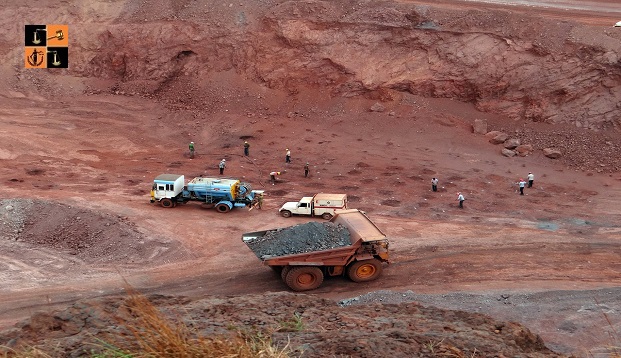
The decision to retrospectively raise the GST rates on royalty for mineral exploration and licence fees for mining rights is expected to face a legal challenge.
The GST Council has proposed to raise the rates retrospectively from July 2017 to 18% from 5% on these 2 Counts. The royalty and licence fees are collected by the states.
According to sources mining and steel companies were in touch with legal consultants to challenge the council’s decision.
Rajat Mohan, senior partner, AMRG Associates, said that “This seems to be a retrospective alteration in law which is issued by way of clarification, imposing a significant tax burden on several steel manufacturers and coal mining companies for the past period. These tax demands will be loaded with interest and penalties, leading to a sunk cost pushing up the commodity prices".
The GST Council has increased the GST on ores and concentrates of metals such as iron, copper, aluminium, zinc and a few others to 18% from 5%.
Finance Minister Nirmala Sitharaman said a correction in the inverted duty structure would help the industry. An inverted duty structure occurs when tax on inputs exceeds that of the output.
Kalpesh Shah, senior partner, Lakshmikumaran & Sridharan Attorneys, said there was an ongoing controversy regarding the nature of the royalty payable by a mining licensee to the government. The question whether such royalty is in the nature of a tax has been referred to a larger 9-Judge bench of the Apex Court.
If the bench considers the royalty as a tax, the council can’t impose GST. Pending a decision, if royalty is regarded as charges for the grant of a mining license, it may qualify as a service and would be levied GST.
Shah said that “There is also a dispute regarding the applicable rate of tax on such mining royalty. Prior to 01.01.2019, the rate notification did not specifically provide for the applicable rate of tax on royalty. As per the residual entry in the rate notification, GST was payable at the same rate of tax as applicable to the underlying mineral which could be less than 18 per cent".
However, the GST Council has proceeded to recommend a tax of 18% with effect from July 1, 2017, at its 45th meeting last month.
Shah said, “Such a clarification would effectively amount to giving retrospective effect to the amendment prescribing 18 per cent as the rate of tax on royalty, which otherwise was meant to come into effect only from 01.01.2019".
He added that “Further, even if ITC (input tax credit) is allowed to be availed of such GST paid on royalty, there may be credit accumulation in the hands of various companies, thus impacting their cash flow position".
Source Link
Social media is bold.
Social media is young.
Social media raises questions.
Social media is not satisfied with an answer.
Social media looks at the big picture.
Social media is interested in every detail.
social media is curious.
Social media is free.
Social media is irreplaceable.
But never irrelevant.
Social media is you.
(With input from news agency language)
If you like this story, share it with a friend!
We are a non-profit organization. Help us financially to keep our journalism free from government and corporate pressure










0 Comments