
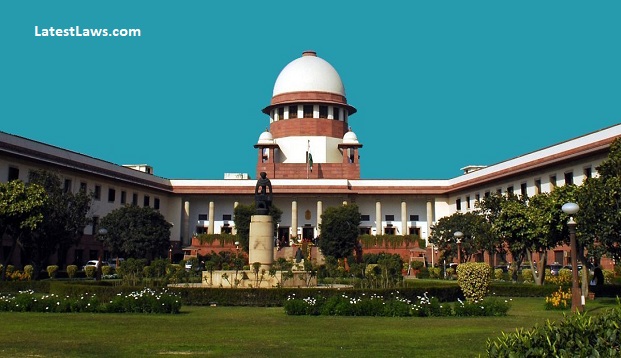
One may be "eligible" to be a Police constable but the authorities can have wider latitude in deciding "suitability", the Apex Court has ruled while upholding the Delhi Police's decision to reject the candidature of 3 men and a woman for the post of constable even though criminal cases against them had ended in compromise or acquittal.
The screening committee of Delhi Police had rejected candidatures of the four on the ground that criminal cases of serious nature did not wipe off the taint despite compromise or acquittal, making them unsuitable for a sensitive post as Police constable. The central administrative tribunal & the High Court of Delhi concurred that the screening committee could not have rejected their candidature, given the fact that they were young people.
Setting aside the decisions of CAT & Delhi HC, a bench of Justice KM Joseph & Justice S Ravindra Bhat said, "Courts exercising judicial review cannot second guess the suitability of a candidate for any public office or post. Absent evidence of malice or mindlessness (to the materials), or illegality by the public employer, intense scrutiny on why a candidate is excluded as unsuitable renders the courts' decision suspect to the charge of trespass into executive power of determining suitability of an individual for appointment."
Writing the Judgment for the bench, Justice Bhat said public service -- like any other, pre-supposes that the state employer has an element of latitude or choice on who should enter its service.
The Bench stated that "Norms, based on principles, govern essential aspects such as qualification, experience, age, number of attempts permitted to a candidate, etc. These broadly constitute eligibility conditions required of each candidate or applicant aspiring to enter public service. Judicial review, under the Constitution, is permissible to ensure that those norms are fair & reasonable, & applied fairly, in a non-discriminatory manner. However, suitability is entirely different; the autonomy or choice of the public employer is greatest, as long as the process of decision making is neither illegal, unfair, or lacking in bona fides".
Read Judgment ;
Source Link
Social media is bold.
Social media is young.
Social media raises questions.
Social media is not satisfied with an answer.
Social media looks at the big picture.
Social media is interested in every detail.
social media is curious.
Social media is free.
Social media is irreplaceable.
But never irrelevant.
Social media is you.
(With input from news agency language)
If you like this story, share it with a friend!
We are a non-profit organization. Help us financially to keep our journalism free from government and corporate pressure











0 Comments