
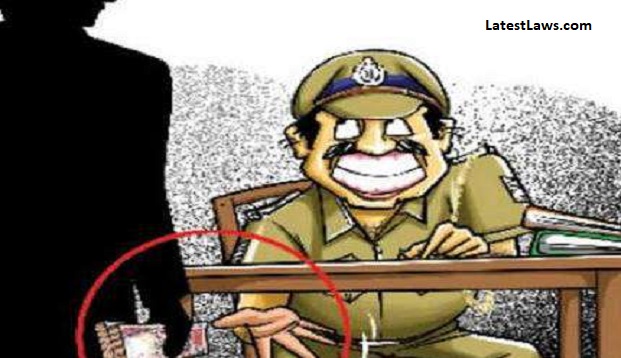
The Chhattisgarh High court recently comprising of a bench of Justice Gautam Chourdiya remarked that evidence of police witnesses has to carefully scrutinise and independently appreciated. (Chandrashekhar Bhardwaj vs The State of Chhattisgarh)
The bench noted that the fact that police informants are members of the law enforcement and involved in the investigation and their ability to see the outcome of the prosecution cannot be dismissed as evidence alone. Prudence however demands that the testimony by police officers who are complicit in the results of the conclusion of the investigation has to be closely scrutinised and independently appreciated.
Facts of the case
The sub-inspector while patrolling received a piece of information that two persons are coming from Orrisa carrying Ganja for sale. The police party apprehended the accused and registered an F.I.R. under Section 20 of the NDPS Act. The Trial Court framed the charge under Section 20(b)(ii)(B) of the NDPS Act against the accused which were denied by them and they prayed for trial.
Contention of the Parties
Learned counsel for the appellants submitted that the trial Court without appreciating the overall evidence available on record has wrongly convicted the appellants by the impugned judgment. No independent witnesses in this case has supported the prosecution case. There are major contradictions and omissions in the statements of the prosecution witnesses. The mandatory provisions of the NDPS Act for conducting search and seizure have not been complied as required under the law. In these circumstances, conviction of the appellants under Section 20 (b) (ii) B of the NDPS, Act and sentence imposed thereunder by the trial Court are liable to be set-aside.
On the other hand learned State counsel supporting the impugned judgment submitted that trial Court considering all the relevant aspects of the matter has rightly convicted and sentenced the appellants which needs no interference by this Court.
Courts observation & Judgment
The bench observed that the fact that police informants are employees of law enforcement who are active in the investigation, as well as their willingness to see the prosecution’s outcome, cannot be ignored as evidence on its own. Prudence, on the other hand, requires that the testimony of police officers who are complicit in the investigation’s conclusion be carefully scrutinised and evaluated separately.
The court relied on the Supreme Court’s decision in the case of Baldev Singh vs. Haryana, wherein it was held that, “there is no legal proposition that evidence of police officials unless supported by independent evidence is unworthy of acceptance. Evidence of police witnesses cannot be discarded merely on the ground that they belong to the police force and interested in the investigation and their desire to see the success of the case. Prudence however requires that the evidence of police officials who are interested in the outcome of the result of the case needs to be carefully scrutinised and independently appreciated. The mere fact that they are police officials does not by itself give rise to any doubt about their creditworthiness.”
The bench observed that it cannot be stated as a rule of law that a police officer can or cannot be a reliable in a criminal case which will always depend upon facts of a given case. If testimony of such a witness is reliable, trustworthy, cogent and duly corroborated by other witnesses or admissible evidence, then statement of such witness cannot be discarded only on ground that he is a police officer and may have some interest in success of the case. Only when his interest in success of case is motivated by overzealousness to an extent of his involving innocent people, then, no credibility can be attached to is statement.
While partly allowing the appeal the court observed, “as per evidence available on record, it stands proved that all the mandatory provisions of the NDPS Act have been duly complied with by the investigating officer while conducting an investigation. The defence has utterly failed to elicit anything from these witnesses which could suggest that they were in any manner inimical to the accused or were interested in the false implication of the accused in the said crime.”
Read Judgment;
SOURCE ; latestlaws.com/
Social media is young.
Social media raises questions.
Social media is not satisfied with an answer.
Social media looks at the big picture.
Social media is interested in every detail.
social media is curious.
Social media is free.
Social media is irreplaceable.
But never irrelevant.
Social media is you.
(With input from news agency language)
If you like this story, share it with a friend!
We are a non-profit organization. Help us financially to keep our journalism free from government and corporate pressure.











0 Comments