
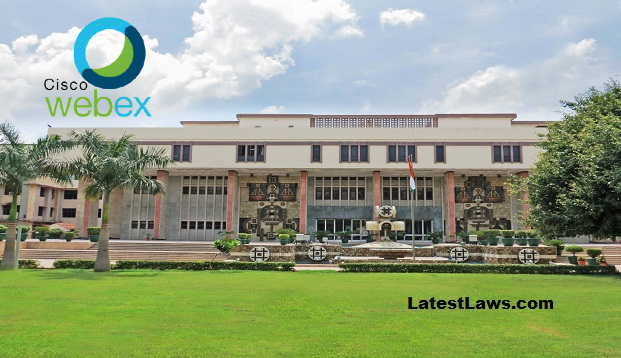
The High Court of Delhi recently comprising of a bench of Justice Manoj Kumar Ohri observed that Under order 9 rule 13 CPC an ex parte decree passed against the defendant can be set aside upon the satisfaction of the court, that either the summons were not duly served upon the defendant or he was prevented by any ‘sufficient cause’ from appearing when the suit was called on for hearing. (Girish Mittal V. Prateek Madhan And Ors)
The Court went on to observe that courts have a wide discretion in deciding the sufficient cause keeping in view the peculiar facts and circumstances of each case. In a case where the defendant approaches the court immediately and within the statutory time specified the description is normally exercised in his favour, provided the absence was not Mala fide or intentional. For the absence of a party in the case the other side can be compensated by adequate costs and the list decided on the merits.
Facts of the case
Facts are that an ex-parte order had been passed against the defendants who have sought recall of the impugned order primarily on the ground that the defendants were never served with the summons in the suit for the reason that at the relevant time, the defendants were not staying at the address mentioned in the memo of parties. Thus application has been filed by defendants under Order IX Rule 7 read with Order XXXVII Rule 2(3) read with Rule 3(7) and Section 151 CPC.
Contention of the Parties
The counsel for the plaintiff favoured the judgement of the trial court for proceeding against defendants as ex-parte. It was also submitted that abundant caution has been exercised in effecting summons to the defendant by various means mentioned in the ‘affidavit of service’ such as speed post, Courier, email and dasti. The plaintiffs’ Learned counsel submitted that there are bona fide evidences against the defendants, that they had Mala fide forethought for not appearing before the trial court.
The counsel for the plaintiff emphasized the advance notice of the suit which was served on the defendants at the e-mail address ‘lalit2627@gmail.com’. The summons through dasti was effected on the same address of the defendants which was mentioned in the Agreement to Sell. The plaintiff had also sent a copy of the summons and the plaint at the official address of the company of the defendant.
The counsel appearing for the counsel for the defendants submitted that the speed post tracking report showed that the doors were locked, the courier tracking report mentioned that the courier was returned back to the party i.e., the plaintiff. The dasti service shown to be effected ought not to be relied upon as the service was sought to effected at an address where the defendants were not residing.
The learned counsel for the defendants submitted that the defendants were not residing at the aforesaid property where the service was sought to be effected, so it was a sufficient cause under Order XXXVII Rule 3(7) CPC and therefore urges that application be allowed. The learned counsel also relied on the decisions in Media Coverage pvt ltd. v Harish Nagewala& ors. [167 (2010) DLT 161].
Court observations and judgment
The bench referring to the case of Kulvinder Singh & Another v. State Bank of India 2009 (107) DRJ 301] and observed the oldest principle of civil law that, ‘a creditor must seek out the debtor’ stated that, it was imperative for the plaintive to give the correct Address of the defendants. The present suit being a summary suit, should not be thrown out where the defendants have been able to prima facie show that they were not served with summons in the suit.
The court while concluding stated; that the predecessor bench concluded its decision on the "Affidavit of service’’ and amounted it to the refusal by the defendants to appear before the court. The learned counsel for the plaintiff fail to bring in the notice of the court that this was summary suit filed under Order XXXVII CPC.
Court while concluding the judgment on the grounds of “sufficient cause”, referred to the case of Parimal v. Veena (2011) 3 SCC 545, which is reproduced as under;
‘’sufficient cause’’ is an expression which has been used in a large number of statutes. The meaning of the word ‘sufficient’ is ‘adequate’ or ‘enough’, in as much as may be necessary to answer the purpose intended. Therefore, Word ‘sufficient’ embraces no more than that which provides a platitude which when the act done suffices do it completes the purpose intended in the facts and circumstances existing in a case and duly come in from the viewpoint of reasonable Standard of a cautious man. In this context, ‘sufficient cause’ means that the party had not acted in a negligent manner or there was a want of Bona fide on its part in view of the facts and circumstances of the case or the party cannot be alleged to have been ‘not acting diligently’ or’ remaining in active’.
However, the facts and circumstances of each case must other sufficient ground to enable the court concerned to exercise discretion for the reason that whenever the court exercises discretion, it has to be exercised judiciously.
The court also made reference to G.P. Srivastava v. R.K. Raizada and Others wherein the Supreme Court had held that, “Under Order 9 Rule 13 CPC an ex parte decree passed against a defendant can be set aside upon satisfaction of the Court that either the summons were not duly served upon the defendant or he was prevented by any “sufficient cause” from appearing when the suit was called on for hearing. Unless “sufficient cause” is shown for non-appearance of the defendant in the case on the date of hearing, the court has no power to set aside an ex parte decree. The words “was prevented by any sufficient cause from appearing” must be liberally construed to enable the court to do complete justice between the parties particularly when no negligence or inaction is imputable to the erring party. Sufficient cause for the purpose of Order 9 Rule 13 has to be construed as an elastic expression for which no hard-and-fast guidelines can be prescribed”.
The bench also referred to the case of state of Bihar v. Kameshwar Prasad Singh [(2000) 9 SCC 94] Wherein it was observed that, “Also while deciding whether there is sufficient cause or not, the court must bear in mind the object of doing substantial justice to all the parties concerned and that the technicalities of the law should not prevent the court from doing substantial justice and doing away with the illegality perpetuated on the basis of judgement impugned before it.”
Considering the facts of the case and the legal precedents on the matter observed that the summons had been returned with the remark that the ‘door was locked’ and thus the defendants would lose a valuable right to defend the suit if they are deemed to be served in the facts narrated above. Thus the court directed that the application be allowed and the order whereby the defendants were presumed to be served by dasti service, be recalled.
Read Judgment
source ; latestlaws.com
Social media is young.
Social media raises questions.
Social media is not satisfied with an answer.
Social media looks at the big picture.
Social media is interested in every detail.
social media is curious.
Social media is free.
Social media is irreplaceable.
But never irrelevant.
Social media is you.
(With input from news agency language)
If you like this story, share it with a friend!
We are a non-profit organization. Help us financially to keep our journalism free from government and corporate pressure.











0 Comments